
Market Insights
Why Gold Has Been Valuable for 5,000 Years: The Timeless Appeal of the World’s Most Prized Metal
Jun
Gold has fascinated human civilizations for thousands of years. Long before stock markets, digital currencies, or even paper money existed, people across every continent recognized gold as something special — something worth protecting, trading, and treasuring. That universal appeal has never faded. Today, gold remains one of the most sought-after assets on the planet, held by central banks, governments, and individual investors alike. Understanding why gold has stayed valuable for so long helps explain why so many people still turn to it when they want to preserve their wealth.
Gold’s Unique Physical Properties Set It Apart
Not every shiny metal becomes money. Gold earned its status because of a rare combination of physical characteristics that very few other materials share. It does not rust, corrode, or tarnish. A gold coin buried in the ground for a thousand years comes out looking nearly identical to the day it was made. That kind of permanence is extraordinarily rare in nature, and early civilizations quickly recognized it as a sign of lasting value.
Gold is also remarkably easy to work with. It is soft enough to be hammered, shaped, and engraved without smelting furnaces or complex tools. Ancient artisans could craft gold into jewelry, ceremonial objects, and coins with relatively simple equipment. At the same time, gold is dense and heavy in a way that is difficult to fake, which made it naturally resistant to counterfeiting long before anyone invented fraud-detection technology.
Finally, gold is genuinely scarce. All the gold ever mined in human history would fit into a surprisingly small space. New gold cannot simply be manufactured — it must be pulled from the earth through significant labor and expense. That limited supply, combined with consistent demand, is a foundational reason why gold has held value across centuries and cultures.
Gold Has Served as Money Across Every Major Civilization
From ancient Egypt to the Roman Empire, from China’s Tang Dynasty to the medieval Islamic world, gold functioned as a medium of exchange and a store of wealth. Rulers minted gold coins bearing their likeness as a symbol of power and economic credibility. Merchants trusted gold to settle transactions across language barriers and national borders because its value was universally understood.
The gold standard — a monetary system in which paper currency was directly backed by a fixed amount of gold — was the foundation of international trade for much of the 19th and early 20th centuries. Even after most countries moved away from that system, gold never lost its role as a benchmark of monetary stability. Central banks around the world continue to hold significant gold reserves today, treating it as a reliable anchor in uncertain times.
This long monetary history matters. Gold is not valuable simply because people decided it should be. It earned that status through thousands of years of practical use as a trusted medium of exchange, and that track record gives it a credibility that no government decree or marketing campaign could manufacture.
Gold Acts as a Hedge Against Inflation and Currency Weakness
One of the most practical reasons people hold gold today is its historical tendency to maintain purchasing power over long periods. When the cost of everyday goods rises and paper currency buys less than it used to, gold has often held its ground or appreciated in terms of that weakening currency. This is sometimes called an inflation hedge, and it is a key reason why financial advisors and economists still discuss gold seriously as part of a diversified portfolio.
Unlike paper money, gold cannot be printed. Governments can expand the money supply at will, but no central bank can increase the total amount of gold in the world. When inflation erodes the value of cash savings, gold’s scarcity becomes a distinct advantage. Investors who want to protect the real value of their wealth over decades have long viewed gold as one of the most reliable tools for doing exactly that.
It is important to be clear: holding gold does not guarantee any particular return, and its price does fluctuate in the short term. But over very long time horizons, gold’s track record of preserving purchasing power is one of the most compelling arguments for including it in a long-term financial strategy.
Gold Thrives During Times of Uncertainty and Crisis
Throughout history, gold has consistently attracted buyers during periods of political turmoil, economic instability, and geopolitical conflict. When confidence in governments, banks, or financial systems wavers, people reach for assets they can hold in their hands — assets whose value does not depend on the promise of any institution. Gold fills that role better than almost anything else.
This is sometimes called gold’s role as a safe-haven asset. During wars, financial crises, and periods of extreme uncertainty, demand for gold typically rises. That demand reflects a deep, almost instinctive recognition that gold represents real, tangible value that has survived the collapse of empires, currencies, and entire economic systems. When paper promises feel fragile, gold feels solid.
This quality makes gold particularly relevant for anyone thinking about long-term wealth preservation. Holding some physical gold — actual coins or bars that you can store safely — provides a layer of financial security that exists completely outside the banking system. That independence is something many investors find genuinely reassuring.
How to Start Building a Position in Physical Gold
For someone new to gold, the good news is that getting started is simpler than it might seem. Physical gold is available in several forms, each with its own advantages:
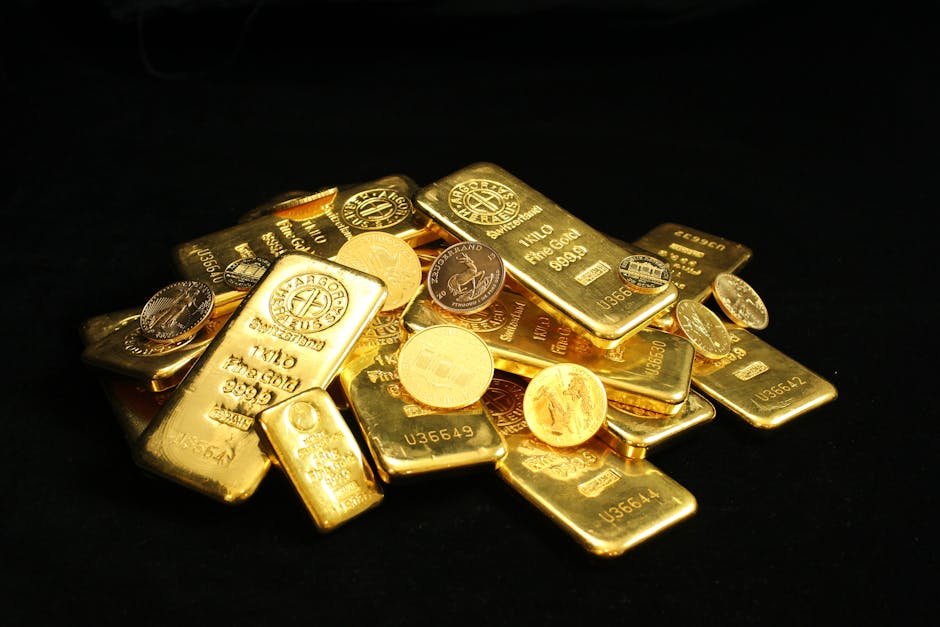
- Gold coins — such as the American Gold Eagle or the Canadian Gold Maple Leaf — are government-minted, widely recognized, and easy to buy and sell.
- Gold bars — available in a range of weights — typically carry lower premiums over spot price and are a cost-effective way to hold larger amounts of gold.
- Fractional gold — smaller coins or bars in weights like one-quarter or one-tenth of an ounce — make gold accessible at a lower entry cost.
When buying physical gold, always purchase from a reputable dealer. Check that products are properly assayed and that pricing is transparent. At Absolute Bullion, you can browse a full selection of gold coins and bars at current spot price with clear, straightforward pricing — no surprises at checkout.
Store your gold securely, whether in a home safe or a dedicated vault service. Keep records of your purchases, including receipts and product descriptions, for insurance and resale purposes.
Why Gold’s Appeal Is Not Going Away
Gold has outlasted every currency system, every economic theory, and every financial innovation humanity has produced so far. It survived the fall of Rome, the collapse of the gold standard, and the rise of digital finance. Each time a new era arrives and someone declares gold irrelevant, demand eventually proves otherwise. The reasons people valued gold five thousand years ago — its scarcity, its durability, its universal recognition — have not changed. Neither has human nature’s preference for things that are genuinely, provably real.
Whether you are looking to protect savings from inflation, diversify away from financial markets, or simply own something with a five-thousand-year track record, gold deserves serious consideration. Visit absolutebullion.com to explore your options, check live pricing, and take your first step toward owning one of history’s most enduring stores of value.
