
Market Insights
The History of Currency Debasement: How Governments Erode Your Wealth
Oct
Money has always been a promise. Governments issue currency and citizens accept it, trusting that it will hold its value over time. But history tells a more complicated story. From ancient Rome to the modern Federal Reserve, rulers and governments have repeatedly discovered a tempting shortcut: when you can’t pay your bills, change the money itself. This practice — known as currency debasement — has played out again and again across thousands of years, and understanding it is one of the most important steps you can take toward protecting your financial future.
What Is Currency Debasement?
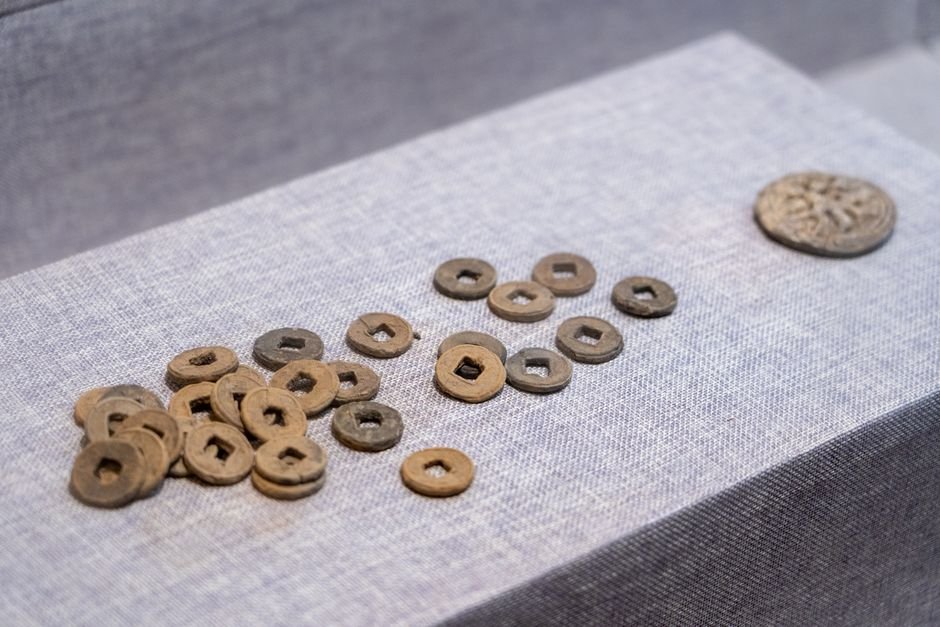
Currency debasement happens when a government deliberately reduces the value of its own money. In the ancient world, this meant literally shaving metal from coins or melting them down and mixing in cheaper metals like copper or tin to stretch the supply. The face value of the coin stayed the same, but the real value — the actual silver or gold content — quietly shrank. Citizens were left holding less than they thought they had, while the government pocketed the difference.
In the modern era, the mechanics changed but the outcome stayed the same. Governments abandoned metal-backed money and moved to fiat currency — paper and digital money backed by nothing more than trust and legal mandate. Once that link to gold or silver was severed, the tool for debasement became the printing press, or today, a few keystrokes at a central bank. When more currency enters circulation without a corresponding increase in goods and services, every dollar already in your wallet quietly loses a slice of its purchasing power.
Lessons From Ancient Rome
The Roman Empire offers one of history’s most detailed and dramatic examples of currency debasement. The Roman silver coin, the denarius, began as a high-quality coin containing a very high percentage of pure silver. Over several centuries of wars, expanding bureaucracy, and political instability, emperors steadily reduced that silver content. By the third century AD, what was called a silver coin was nearly pure copper with only a thin silver wash on the surface.
The consequences were severe. Merchants recognized the debasement and raised prices accordingly. Confidence in Roman currency collapsed in many parts of the empire, with people returning to barter or demanding payment in commodities rather than coins. Historians point to currency debasement as one of the contributing factors in the economic decline that weakened the empire from within. The Roman example is not just ancient history — it is a clear template for how monetary manipulation corrodes an economy.
The 20th Century and the End of the Gold Standard
For much of modern history, currencies were tied to gold. The gold standard forced governments to maintain discipline because they could only issue as much currency as they had gold to back it. That discipline was gradually abandoned throughout the twentieth century. In the United States, President Franklin D. Roosevelt restricted private gold ownership in 1933 and revalued the dollar against gold. Then in 1971, President Richard Nixon ended the direct convertibility of the U.S. dollar to gold entirely — a moment often called the “Nixon Shock.”
After 1971, the dollar became a fully fiat currency. Without the anchor of gold, the Federal Reserve gained the ability to expand the money supply without hard limits. The inflationary spike of the 1970s followed shortly after, and while the causes were multiple, the loss of monetary discipline played a meaningful role. Since then, the long-term purchasing power of the dollar has declined significantly, meaning it simply buys less today than it did fifty years ago. Savers who held cash watched their real wealth slowly erode.
How Inflation Works as Modern Debasement
Today’s version of currency debasement is inflation. When central banks expand the money supply — through mechanisms like quantitative easing or keeping interest rates artificially low — more money chases the same amount of goods. Prices rise, and the purchasing power of every dollar you own falls. This process transfers wealth in a subtle but powerful way: from savers and wage earners to those who hold real assets or who borrowed money that they can now repay with cheaper dollars.
The damage compounds over time. Even a modest annual inflation rate, sustained over decades, can cut the real value of savings dramatically. Governments also benefit directly from inflation when they carry large debts, since they effectively repay those debts with currency worth less than when they borrowed it. For everyday people, the result is that working hard and saving diligently is not enough if your savings are sitting in a depreciating currency. Understanding this dynamic is the first step toward doing something about it.
Why Precious Metals Have Endured as a Store of Value
Gold and silver have been used as money and as stores of value for thousands of years — and for good reason. Unlike paper currency, no government can print more gold. Its supply grows only slowly through mining, which means its purchasing power tends to hold up far better over long periods. A Roman citizen who saved gold coins rather than debased denarii preserved their wealth through the chaos of the empire’s decline. The same principle applies today.
Throughout modern monetary history, gold in particular has tended to rise in price during periods of high inflation, currency crises, and economic uncertainty. Silver has a similar track record, with the added dimension that it serves major industrial uses, supporting demand from multiple directions. Neither metal is a guaranteed investment, and prices fluctuate — but as a long-term hedge against the ongoing debasement of fiat currency, they have few rivals. Physical metal held in your possession is not someone else’s liability and cannot be inflated away.
Practical Steps to Protect Your Purchasing Power
Understanding currency debasement is valuable — acting on that understanding is what matters. A practical starting point is to allocate a portion of your savings into physical precious metals. Many financial advisors suggest a range of five to fifteen percent in hard assets as a portfolio hedge, though your specific situation will determine what makes sense for you. The key is consistency: accumulating gold and silver steadily over time, rather than trying to time the market.
When you’re ready to buy, work with a reputable dealer who offers transparent pricing and a clear selection of coins and bars. At Absolute Bullion, you can browse a full range of gold and silver products at current spot price, from internationally recognized bullion coins to cost-effective bars. Focus on well-known, liquid products — items like American Gold Eagles, Canadian Maple Leafs, and silver rounds — that are easy to buy, sell, and verify. Store your metals securely, whether in a home safe or a professional depository, and keep records of your purchases.
The history of currency debasement is long, consistent, and ongoing. Every major civilization that has reached for the printing press — or its ancient equivalent — has ultimately paid a price in lost public trust and eroded savings. The good news is that the same history that documents the problem also points clearly to the solution: real, physical assets that governments cannot manufacture on demand. If you are ready to take the first step toward protecting your purchasing power, visit absolutebullion.com today and explore your options with confidence.
