
Market Insights
How to Read a Gold Price Chart: A Beginner’s Guide
May
Gold has been a store of value for thousands of years, but if you are new to buying or tracking precious metals, staring at a gold price chart for the first time can feel overwhelming. Lines moving up and down, numbers along the axes, and unfamiliar terms like “spot price” and “troy ounce” can make the whole thing look more complicated than it really is. The good news is that reading a gold price chart is a learnable skill, and once you understand the basics, you will be able to make smarter, more confident decisions about when and how to buy gold.
What Is the Spot Price of Gold?
Before you can read a chart, you need to understand what it is actually measuring. The number shown on most gold price charts is the spot price — the current market price for one troy ounce of gold for immediate delivery. This price is set by global commodity exchanges and changes continuously during trading hours, driven by supply and demand, currency movements, geopolitical events, and macroeconomic data.
It is important to know that a troy ounce is not the same as the standard avoirdupois ounce used in everyday life. One troy ounce equals approximately 31.1 grams, while a regular ounce is about 28.35 grams. When you look at a gold price chart, every price listed is based on this troy ounce standard, which is used universally in the precious metals industry.
The spot price is a benchmark. When you buy a physical gold coin or bar, you will pay the spot price plus a premium that covers production, distribution, and dealer costs. Understanding the spot price helps you evaluate whether you are getting a fair deal on any gold product you consider purchasing.
Understanding the Axes on a Gold Price Chart
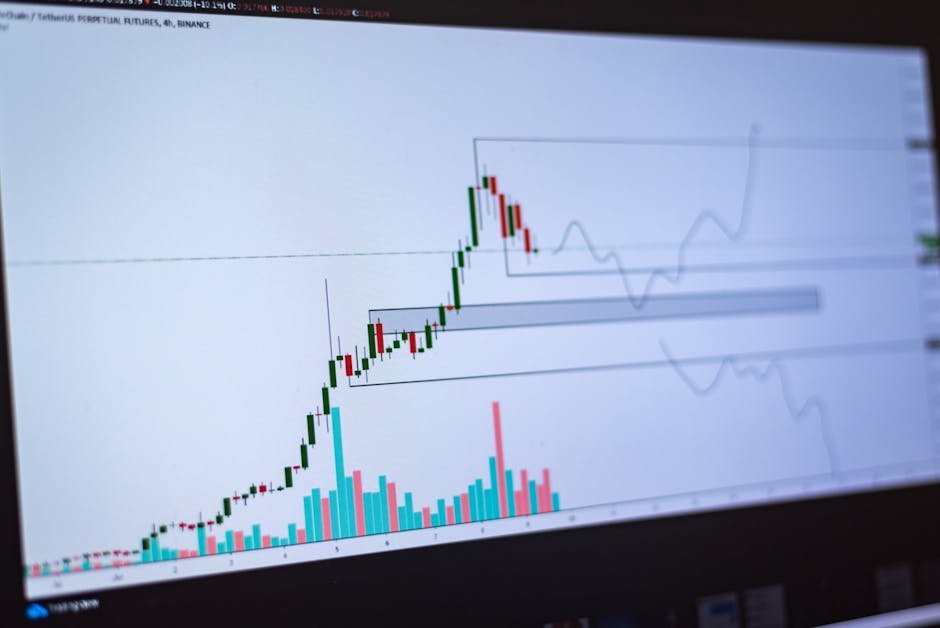
A gold price chart has two axes, just like any other graph. The horizontal axis (X-axis) represents time. Depending on the chart you are viewing, this could show hours, days, months, or even decades. The vertical axis (Y-axis) represents the price, almost always displayed in U.S. dollars per troy ounce.
Most online gold price charts let you choose a time frame. Common options include one day, one week, one month, six months, one year, five years, and all-time. Each time frame tells a different story. A one-day chart shows you short-term price fluctuations within a single trading session. A five-year chart shows longer trends and helps you see how gold has performed over a meaningful stretch of time.
When you are just getting started, spend time looking at multiple time frames on the same chart. A price move that looks dramatic on a one-day chart might appear quite small when viewed against a five-year backdrop. This perspective is essential for avoiding emotional reactions to normal, short-term price swings.
Identifying Trends: Up, Down, and Sideways
One of the most practical skills you can develop is identifying the general direction of price movement, which analysts call a trend. An uptrend means gold is making a series of higher highs and higher lows over time — the overall line moves up from left to right. A downtrend is the opposite, with lower highs and lower lows showing up across the chart.
A sideways or consolidating market means the price is moving within a relatively tight range without a clear direction. This often happens when buyers and sellers are roughly balanced, waiting for new economic data or geopolitical developments to push the market in one direction. Understanding whether gold is trending or consolidating helps you set realistic expectations.
Keep in mind that trends can exist on multiple time frames simultaneously. Gold might be in a short-term downtrend while still being in a long-term uptrend. Always zoom out to get the bigger picture before drawing conclusions from a short window of data.
Key Terms You Will Encounter on Gold Charts
A few terms appear regularly on gold price charts and in the commentary surrounding them. Getting comfortable with these will make the charts much easier to interpret:
- Support level: A price point where gold has historically had difficulty falling below, because buying interest tends to increase at that level.
- Resistance level: A price point where gold has historically struggled to break above, because selling pressure tends to increase there.
- Moving average: A line on the chart that smooths out day-to-day price noise by averaging prices over a set number of days, such as 50 or 200 days. It helps reveal the underlying trend more clearly.
- Volume: The number of contracts or units traded in a given period. Higher volume during a price move often suggests stronger conviction behind that move.
- All-time high: The highest price gold has ever reached. Watching how the price behaves near this level can be informative.
You do not need to master all of these concepts at once. Start by identifying the basic trend and noting major support and resistance levels. Everything else can be learned gradually as you spend more time watching the market.
What Moves the Gold Price?
A chart shows you what the price has done, but understanding why gold moves helps you interpret what you see. Gold tends to rise when investors seek safety during times of economic uncertainty, geopolitical tension, or rising inflation. It often moves inversely to the U.S. dollar — when the dollar weakens, gold priced in dollars typically becomes more attractive to global buyers, pushing the price higher.
Interest rates also play a significant role. When interest rates are low, the opportunity cost of holding gold (which pays no interest or dividends) is reduced, making gold relatively more appealing. When rates rise sharply, some investors shift toward interest-bearing assets, which can put downward pressure on gold prices.
Central bank buying and selling, mining supply data, and seasonal demand from jewelry markets in countries like India and China are additional factors that can influence the price over longer periods. Keeping an eye on these fundamentals alongside your chart reading gives you a much more complete picture.
How to Use Charts When Buying Physical Gold
If your goal is to buy physical gold — coins, bars, or rounds — charts can help you time your purchases more thoughtfully. Rather than trying to predict the exact bottom of the market, many buyers use a strategy called dollar-cost averaging, where they purchase a fixed dollar amount of gold at regular intervals regardless of the current price. This approach smooths out the impact of volatility over time.
Checking a chart before you buy is simply good practice. If prices have spiked sharply in a very short period, you might choose to wait for a pullback. If prices are near a well-established support level, that context might give you added confidence to move forward with a purchase.
Reading a gold price chart is a skill that improves with practice, and even a basic understanding puts you ahead of most casual buyers. Start by bookmarking a reliable live chart, choose a few different time frames to study, and revisit it regularly to build your intuition for how gold behaves. When you are ready to buy at the current spot price, visit Absolute Bullion to explore a full selection of gold coins and bars with live, transparent pricing — and take your first step toward owning real gold with confidence.
