
Market Insights
Countries with the Highest Gold Reserves in the World (2024 Rankings)
Sep
Gold has served as the ultimate store of value for thousands of years, and today’s central banks know it. Around the world, governments hold enormous quantities of gold in their vaults as a way to back their currencies, diversify away from the US dollar, and protect their economies during times of financial stress. If you have ever wondered which countries are sitting on the biggest gold hoards, here is a clear breakdown of the top holders and why their strategies matter to everyday investors like you.
Why Countries Hold Gold Reserves
Central banks and governments hold gold for reasons that go far beyond tradition. Gold is a globally recognized asset that carries no counterparty risk — unlike a bond or a bank deposit, it cannot default. When a country holds gold, it owns something of intrinsic value that does not depend on another government’s promise to pay.
Gold also serves as a hedge against currency weakness and inflation. When a country’s own currency loses purchasing power, its gold reserves help stabilize the national balance sheet. This is especially important during geopolitical crises, trade disputes, or periods of rapid money-supply expansion. Central banks around the world have been net buyers of gold for well over a decade, a clear signal that institutions trust the metal for long-term wealth preservation.
Understanding which nations hold the most gold gives individual investors useful context. If the world’s largest economies treat gold as an essential reserve asset, it is worth asking whether your own portfolio reflects that same wisdom.
The United States — The Largest Holder
The United States holds more gold than any other nation, with official reserves stored primarily at Fort Knox in Kentucky, the Federal Reserve Bank of New York, and West Point. The US has maintained this top position for decades, and its gold represents a significant portion of its total foreign reserves.
Historically, US gold holdings were central to the Bretton Woods system, which tied the international monetary system to the dollar at a fixed price in gold until President Nixon ended dollar-gold convertibility in 1971. Even after that change, the US never sold off its stockpile. Instead, it held firm — a fact that many analysts interpret as quiet confidence in gold’s long-term role in the global financial system.
Germany, Italy, and France — Europe’s Gold Giants
European nations collectively hold a massive share of the world’s official gold. Germany ranks second globally with reserves split between domestic vaults and storage locations abroad, including the Federal Reserve Bank of New York and the Bank of England. In recent years, Germany repatriated a significant portion of its overseas gold, bringing it home as a matter of national security and public confidence.
Italy and France each hold substantial reserves as well, ranking among the top five globally. Both countries hold gold equal to a large percentage of their total foreign reserves, making their balance sheets more gold-heavy than many of their peers. The European Central Bank also holds gold as part of its reserve portfolio, reinforcing the metal’s ongoing relevance in modern central banking.
The concentration of gold in Europe reflects a long financial history tied to gold-backed currencies and a continuing belief that the metal acts as an anchor of monetary credibility, particularly during periods of uncertainty in the eurozone.
Russia and China — Rising Eastern Powers
Russia and China have been two of the most aggressive gold buyers over the past two decades. Russia dramatically increased its gold reserves as part of a deliberate strategy to reduce dependence on the US dollar, especially following international sanctions. At certain points, Russia’s central bank became one of the single largest purchasers of gold in the world on an annual basis.
China’s official gold holdings, reported through the People’s Bank of China, have also grown significantly. However, many analysts believe China’s actual gold holdings may be considerably larger than officially disclosed, given the country’s position as the world’s top gold-mining nation and its encouragement of domestic gold accumulation. Both Russia and China view gold as a strategic asset in a world where the dollar’s dominance may eventually face meaningful challenges.
For individual investors watching these trends, the takeaway is straightforward: when major governments diversify into gold at scale, it reflects institutional-level conviction that the metal belongs in a serious portfolio.
Switzerland, Japan, India, and Other Notable Holders
Beyond the top five, several other countries maintain impressive gold reserves worth noting. Switzerland holds a high level of gold relative to the size of its economy, a legacy of its historic role as a global financial center. The Swiss National Bank’s reserves include significant gold tonnage that contributes to the franc’s reputation as a safe-haven currency.
India rounds out the top ten and has a unique relationship with gold that blends official reserves with enormous private ownership. Indian households are estimated to hold one of the largest private stockpiles of gold jewelry and bullion in the world. Japan also holds substantial reserves, as does the Netherlands, which — like Germany — has repatriated much of its gold from overseas storage in recent years.
Taiwan, Portugal, Kazakhstan, and Uzbekistan are among the other nations that have been active in building or maintaining meaningful gold reserve positions. Emerging economies in particular have shown growing interest in gold as a way to protect themselves from dollar-denominated volatility.
What This Means for Individual Investors
The pattern is clear: from Washington to Beijing to Frankfurt, the world’s most powerful financial institutions treat gold as a core reserve asset. That does not mean you should put every dollar into precious metals, but it does suggest that ignoring gold entirely may leave your savings more exposed than necessary.
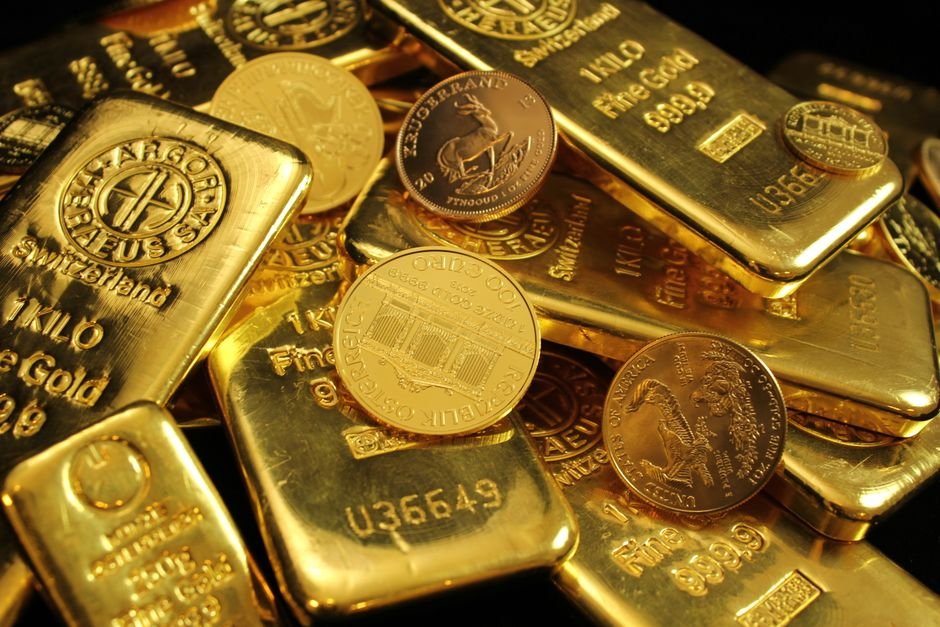
Individual investors can access the same fundamental asset — physical gold — through coins and bars rather than the tonnage that governments purchase. Common options include:
- Gold American Eagles — official US Mint coins backed by the government
- Gold American Buffalos — .9999 fine gold coins with strong collector and investor appeal
- Gold bars — available in various sizes, typically offering lower premiums per ounce at higher quantities
- Gold Maple Leafs and Krugerrands — internationally recognized coins from Canada and South Africa
At current spot price, even a modest allocation to physical gold can meaningfully improve the resilience of a diversified portfolio. Visit Absolute Bullion to browse live inventory and compare premiums on gold coins and bars before you buy.
Conclusion
The world’s largest gold reserves are held by the countries with the most to protect — and they are not selling. Central banks across the United States, Europe, and Asia have spent years building and defending their gold positions because they understand that no paper asset offers the same combination of durability, liquidity, and independence. As an individual investor, you have access to the same timeless asset in a form that fits your budget. Explore your options today at absolutebullion.com and take the first practical step toward adding real gold to your financial strategy.
