
Market Insights
Best Home Safes for Storing Gold and Silver in 2025
Sep
Buying gold and silver is only half the equation. Once you own physical precious metals, keeping them safe becomes just as important as choosing the right coins or bars. A quality home safe gives you immediate access to your holdings while protecting them from theft, fire, and water damage. With so many options on the market in 2025, knowing what to look for before you spend your money will save you from a costly mistake. This guide breaks down everything a new precious metals owner needs to know about choosing the right home safe.
Why a Dedicated Safe Matters for Precious Metals
Precious metals are dense, valuable, and completely anonymous once stolen. Unlike a stolen credit card, there is no way to freeze or reverse a theft of physical gold and silver. Standard home insurance policies often have strict limits on jewelry and valuables, meaning a theft could leave you far short of being made whole. A quality safe is your first and most important layer of protection.
Beyond theft, gold and silver are vulnerable to fire damage. While metals do not burn, extreme heat can warp coins, destroy protective capsules, and melt smaller pieces entirely. Water from firefighting efforts can also tarnish silver significantly. A safe rated for both fire and water resistance protects your collection from disasters that go well beyond burglary. Think of a safe not as a luxury, but as a necessary part of responsible ownership.
Key Ratings and Certifications to Look For
Not all safes are created equal, and the ratings on the box matter a great deal. For fire protection, look for safes tested and certified by Underwriters Laboratories (UL) or a similar independent testing body. A UL 72 Class 350 rating means the interior of the safe stayed below 350°F during a standardized fire test, which is generally safe for paper documents. For precious metals specifically, any fire rating provides meaningful protection, since metals require far higher temperatures to be damaged.
For burglary resistance, UL ratings again set the standard. A UL Residential Security Container (RSC) rating means the safe was tested against a skilled burglar using common hand tools for a set period. Higher ratings like UL TL-15 or TL-30 indicate the safe resisted a tool attack for 15 or 30 minutes respectively. For most homeowners, a UL RSC or TL-15 rated safe strikes a practical balance between cost and security.
Water resistance is often overlooked but deserves attention. Some safes are tested to withstand submersion in water for a set period, which matters when sprinkler systems or fire hoses are involved. Look for an ETL or UL water resistance rating if this protection is important to you.
The Right Size for Your Collection
One of the most common mistakes first-time safe buyers make is purchasing a safe that is too small. Gold and silver are heavy. A modest stack of silver bars or rolls of coins adds up in weight quickly, and you want a safe that can hold your current holdings with room to grow. Measure the interior dimensions carefully, not just the exterior, and think about the actual footprint of your collection.
Consider the weight of the safe itself as well. Heavier safes are harder to remove, which is a direct security benefit. However, if you plan to store a safe in an upper-floor room, confirm the floor can handle the combined weight of the safe and its contents. A good rule of thumb is to choose a safe that feels uncomfortably large when you first buy it. Collections tend to grow faster than expected.
Mounting and Placement Strategies
A safe that is not bolted down is little more than a carrying case for a determined thief. Most quality safes include pre-drilled anchor holes and hardware for bolting to a concrete floor or wooden subfloor. Use these. Anchoring your safe to the structure of your home transforms a manageable object into something that requires serious time and equipment to move.
Placement matters just as much as anchoring. Avoid obvious locations like master bedroom closets, which are the first place experienced burglars check. Consider a basement utility room, a closet in a less-used room, or even a custom installation behind drywall or cabinetry. The less visible and accessible your safe appears, the better. Some homeowners use a smaller decoy safe in the bedroom while keeping the main safe hidden elsewhere.
- Bolt your safe to the floor or wall using the manufacturer-provided hardware.
- Avoid the master bedroom closet as a primary location.
- Consider a secondary hidden location for your primary safe.
- Keep the safe’s existence confidential — only trusted household members need to know.
Lock Types and Access Options
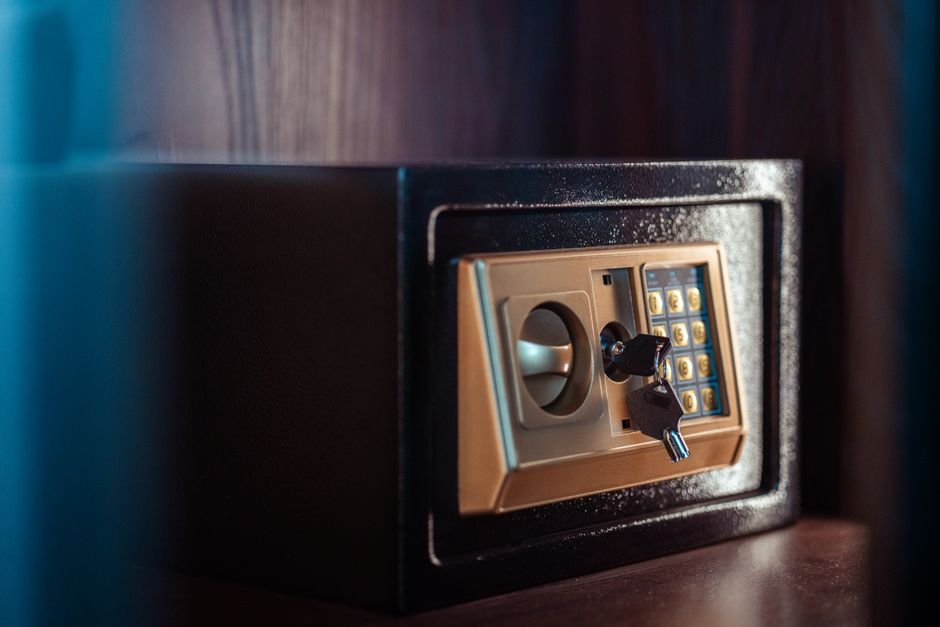
Modern home safes come with several lock types, each with trade-offs. Electronic keypads are fast and convenient but depend on batteries that can fail at inconvenient moments. Always choose an electronic lock safe that also includes a manual key override for emergencies. Combination dial locks are highly reliable since they have no electronics to fail, but they are slower to open and require more practice to use smoothly.
Biometric locks, which use a fingerprint scanner, offer fast access and are popular in 2025. However, biometric systems can be finicky in humid environments or if your hands are dirty or wet — not ideal when you are reaching for emergency assets. A solid electronic keypad with a key backup remains the most practical choice for most owners. Whatever lock type you choose, change the combination or reprogram the keypad immediately after purchase.
Recommended Safe Categories for Different Budgets
For those just starting out with a modest collection of coins or small bars, a quality UL RSC-rated gun safe or compact home safe in the $300 to $600 range offers solid protection without a major upfront investment. These safes are widely available, easy to anchor, and sufficient for collections worth up to several thousand dollars at current spot price.
For growing collections, a mid-range safe with a TL-15 rating and a one-hour fire rating provides meaningfully stronger protection and is a worthwhile upgrade. These units typically start around $1,000 and go up from there depending on size and features. For serious collectors with substantial holdings, a TL-30 rated safe or a purpose-built vault door installed in an existing room represents the highest level of residential protection available.
No matter which safe you choose, pair it with a current homeowner’s or renter’s insurance policy that includes a scheduled personal property rider for your precious metals. This combination of physical security and insurance coverage is the most complete protection strategy available to individual owners.
Protecting your precious metals investment starts with the right storage solution and ends with peace of mind. Before you add to your collection, make sure your storage is ready to handle it. Browse the full selection of gold and silver coins and bars at Absolute Bullion, where you can check live pricing at current spot price and find the products that deserve a safe home. Your metals are only as secure as the steps you take to protect them — start there.
