
Market Insights
Gold Performance During Recessions: A Historical Analysis
May
When the economy slows down, investors naturally start looking for safe places to put their money. Gold has earned a reputation as a reliable store of value during economic downturns, but what does the historical record actually show? Understanding how gold has performed during past recessions can help you make more informed decisions about your own financial strategy — without relying on hype or speculation. This article breaks down the evidence clearly and honestly.
What Happens to Gold When the Economy Contracts
Gold tends to behave differently from stocks and real estate during recessions. While equity markets often fall sharply as corporate earnings decline and investor confidence drops, gold frequently moves in the opposite direction. This inverse relationship is one of the reasons financial professionals refer to gold as a counter-cyclical asset — meaning it often performs well precisely when other asset classes are struggling.
The core reason for this behavior is demand-driven. During periods of economic uncertainty, investors shift capital out of riskier assets and into instruments they consider safe. Gold has served this role for thousands of years, and modern markets continue to reflect that instinct. Central banks, institutional investors, and individual buyers all tend to increase their gold holdings when recession fears rise.
It is worth noting that gold does not always rise during every recession, and the degree of any price movement depends on many factors including inflation, interest rates, and the severity of the economic contraction. History, however, offers a useful framework for understanding the general pattern.
Gold During Major U.S. Recessions: Key Historical Periods
The 1970s provide one of the most dramatic examples of gold’s behavior during economic stress. The United States experienced two significant recessions during that decade, both accompanied by high inflation. After President Nixon ended the dollar’s convertibility to gold in 1971, the gold price was allowed to float freely. Over the course of the decade, gold’s price rose substantially as inflation eroded purchasing power and the economy struggled through energy crises and stagflation.
The recession of 2001, which followed the collapse of the dot-com bubble, also coincided with a notable shift in gold’s price trajectory. Gold had been in a prolonged bear market through the 1990s, but the combination of economic contraction, the September 11 attacks, and growing uncertainty helped spark a multi-year bull market in gold that extended well into the next decade.
Perhaps the most widely studied example is the 2007–2009 financial crisis. As the housing market collapsed and major financial institutions faced insolvency, gold prices rose significantly over the course of the recession and continued climbing in the years that followed. Investors who held gold during that period found it acted as a meaningful buffer against losses in their stock and real estate holdings.
The Role of Inflation in Gold’s Recession Performance
One important distinction to understand is the difference between a recession with high inflation and a recession with deflation or very low inflation. Gold’s strongest historical performances during economic downturns have generally occurred when inflation was also elevated. When prices rise while the economy contracts — a condition known as stagflation — gold tends to attract particularly strong demand because it preserves purchasing power while cash and bonds lose real value.
In deflationary recessions, gold’s behavior has been more mixed. During the Great Depression of the 1930s, for example, the U.S. government fixed the gold price and eventually required private citizens to hand in their gold coins and bars. The conditions that apply to gold in any given recession are shaped significantly by the monetary and fiscal policy responses of governments and central banks.
This is why understanding the broader economic context — not just the recession itself — matters so much when evaluating gold as part of a financial strategy. Inflation expectations, central bank interest rate decisions, and currency strength all interact with gold’s price in complex ways.
Gold vs. Stocks During Economic Downturns
A direct comparison between gold and equities during recessionary periods reveals a consistent pattern. Major stock market indexes have experienced significant drawdowns during most U.S. recessions. Gold, by contrast, has frequently either held its value or increased in price during the same windows. This divergence is exactly what investors mean when they describe gold as a portfolio hedge.
That said, it is important not to overstate the case. Gold is not guaranteed to rise in any economic environment, and there have been periods where both gold and stocks declined simultaneously. Gold also generates no income — it pays no dividends or interest — which means its value is entirely dependent on price appreciation and the role it plays in reducing overall portfolio volatility.
The practical takeaway is that holding some gold alongside stocks and other assets may reduce the overall swings in your portfolio’s value during downturns, even if gold itself does not deliver dramatic gains in every instance.
Physical Gold vs. Gold-Backed Financial Products
When investors decide to add gold to their holdings with recession protection in mind, they face a choice between physical gold and financial instruments like gold ETFs, futures contracts, or mining stocks. Each option carries different risks and benefits worth understanding before you commit capital.
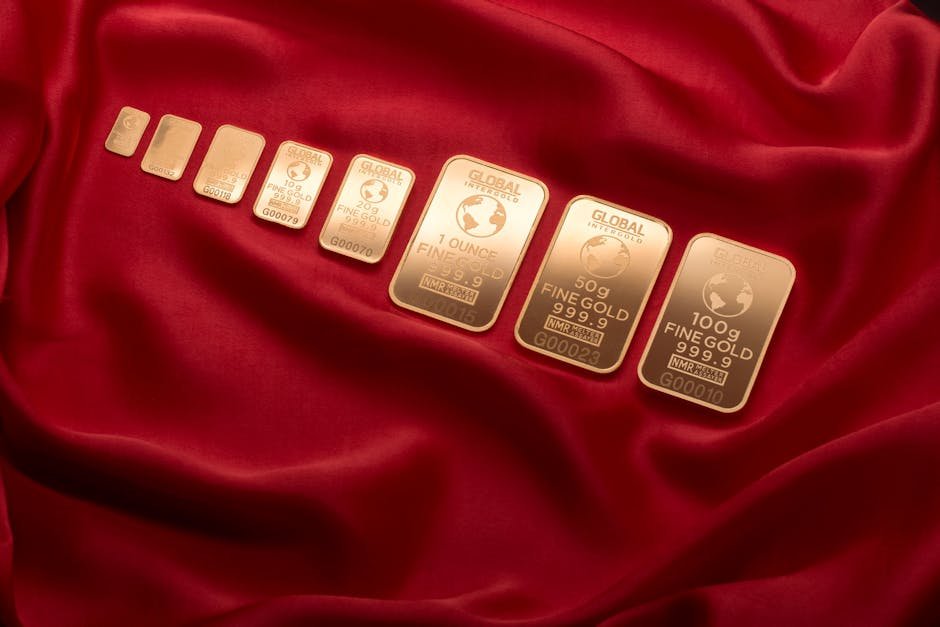
Physical gold — coins and bars held in your possession or stored in a secure facility — carries no counterparty risk. It does not depend on the solvency of a bank, fund manager, or corporation. During a severe financial crisis, this distinction matters. If financial institutions face pressure or freeze assets, physical gold remains fully accessible to its owner.
Gold ETFs and similar products offer convenience and liquidity, but they represent a claim on gold rather than gold itself. For investors whose primary concern is genuine crisis protection, owning physical metal provides a level of security that paper products simply cannot replicate. Absolute Bullion offers a range of gold coins and bars suitable for both new and experienced buyers, all priced at current spot price with transparent fees.
Practical Steps for Buying Gold Before a Recession
If you are considering adding gold to your financial strategy in anticipation of economic uncertainty, a few practical principles are worth keeping in mind. First, start with well-recognized products. Government-minted coins such as American Gold Eagles, Canadian Maple Leafs, and South African Krugerrands carry strong liquidity and are easy to buy and sell anywhere in the world.
Second, consider your storage situation carefully. Home storage offers immediate access but requires a quality safe and appropriate insurance coverage. Third-party vault storage provides professional security and insurance for larger holdings. Second, think about buying incrementally rather than all at once. Spreading your purchases over time smooths out the effect of price fluctuations.
- Start with well-recognized coins or bars for easy resale
- Store securely — at home in a quality safe or with a professional vault service
- Buy in stages to reduce the risk of purchasing at a peak
- Keep records of all purchases for tax and insurance purposes
- Check live pricing before every transaction to ensure fair value
The historical record suggests that gold has served as a meaningful store of value during many of the most challenging economic periods in modern history. While no asset offers certainty, the pattern of gold holding or gaining value during recessions — particularly inflationary ones — is well documented. If you are ready to explore physical gold as part of your financial planning, visit absolutebullion.com for current pricing, product options, and guidance from a team that specializes in helping everyday buyers navigate the precious metals market with confidence.
