
Market Insights
How Gold Protects Against Inflation: A Timeless Hedge for Your Wealth
May
Inflation quietly erodes the purchasing power of money over time. A dollar saved today buys less tomorrow, and over decades, the effect can be devastating to a nest egg built entirely in cash or low-yield savings accounts. That is why many investors, from everyday savers to institutional fund managers, have historically turned to gold as a reliable store of value. Understanding how gold works as an inflation hedge — and how to use it practically — can help you make smarter decisions about protecting your wealth.
What Inflation Actually Does to Your Money
Inflation is the general rise in the price of goods and services over time. When inflation rises, each unit of currency you hold buys fewer goods than it did before. Central banks, including the U.S. Federal Reserve, manage inflation through monetary policy, but they cannot eliminate it entirely. Over long periods, even modest annual inflation compounds into significant purchasing power loss.
Savings accounts and certificates of deposit sometimes struggle to keep pace with inflation, especially during periods when interest rates lag behind rising prices. When your savings earn less interest than the rate of inflation, your real wealth is shrinking even as your account balance grows. This is the core problem that inflation-resistant assets are designed to address.
Cash and government bonds offer predictability, but they carry this hidden risk. Investors looking to preserve wealth often search for assets that hold intrinsic value independent of any government’s monetary decisions — and that search frequently leads to gold.
Why Gold Has Been a Store of Value for Thousands of Years
Gold has been used as money and a store of value across virtually every major civilization in recorded history. Unlike paper currency, gold cannot be printed or created by a government decree. Its supply grows slowly through mining, and the total amount of gold ever mined in human history fits within a surprisingly small volume. That scarcity is a fundamental source of its enduring value.
Gold is durable, divisible, portable, and universally recognized. These properties made it ideal as a monetary metal for centuries and continue to make it attractive today. Even after the United States abandoned the gold standard in 1971, gold retained widespread global demand from investors, central banks, jewelers, and industrial users alike.
Central banks around the world continue to hold significant gold reserves precisely because of its independence from any single currency or government. When confidence in paper money weakens — whether due to inflation, geopolitical instability, or financial crises — gold tends to draw increased interest as a safe haven asset.
The Relationship Between Gold and Inflation
Gold and inflation have a historically significant relationship. During periods of high inflation, gold has often maintained or increased its purchasing power while the value of paper money declined. This does not mean gold rises in lockstep with every monthly inflation report, but over longer time horizons, gold has demonstrated a capacity to preserve real wealth that paper assets sometimes cannot match.
One reason for this relationship is that inflation often reflects loose monetary policy — central banks expanding the money supply, which dilutes the value of existing currency. Gold, with its fixed and slowly growing supply, tends to appreciate in terms of that diluted currency. Investors anticipating further currency debasement often move toward gold, increasing demand and supporting its price.
It is important to understand that gold is not a short-term trading vehicle. Its role in a portfolio is typically as a long-term store of value and a counterweight to assets that are more vulnerable to inflation and currency risk. Thinking of gold as financial insurance rather than a speculative bet reflects how most experienced investors approach it.
Practical Ways to Add Gold to Your Portfolio
There are several ways to gain exposure to gold, and physical gold remains the most direct and tangible option for many investors. When you own physical gold, you hold an asset with no counterparty risk — it does not depend on any bank, broker, or financial institution to maintain its value.
- Gold coins: Government-minted coins such as American Gold Eagles, Canadian Maple Leafs, and South African Krugerrands are widely recognized, easy to buy and sell, and available in multiple sizes.
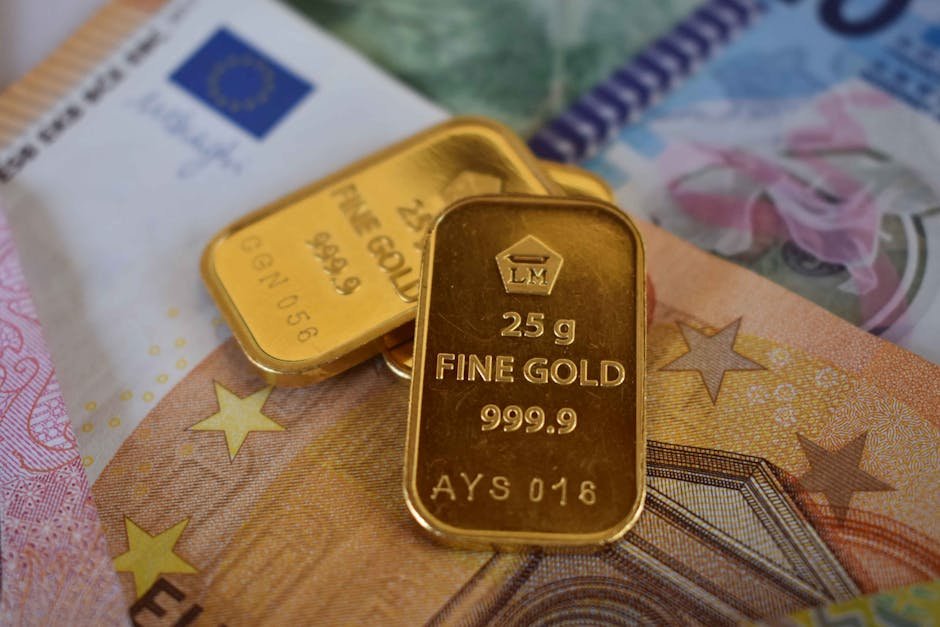
- Gold bars: Bullion bars offer a cost-effective way to purchase larger quantities of gold, often at a lower premium over spot price than coins.
- Gold ETFs and funds: These provide paper exposure to gold prices without holding physical metal, which may suit investors who prefer not to store physical gold.
- Gold IRAs: A self-directed IRA can hold physical gold, allowing investors to use tax-advantaged retirement accounts to own tangible precious metals.
For most first-time buyers, starting with recognizable government-minted coins is a practical and straightforward approach. They are easy to verify, widely accepted by dealers, and simple to liquidate when needed. You can browse current inventory and see live pricing at absolutebullion.com to get a clear sense of what physical gold costs at current spot price.
How Much Gold Should You Consider Holding?
There is no single right answer to how much of your portfolio should be in gold — it depends on your financial goals, risk tolerance, time horizon, and overall investment strategy. Many financial planners who incorporate gold into client portfolios suggest treating it as a diversifying allocation rather than a primary holding.
A commonly discussed range is somewhere between five and fifteen percent of a portfolio allocated to precious metals, though some investors choose to hold more during periods of heightened inflation or economic uncertainty. The goal is balance: enough gold to provide meaningful protection if paper assets decline in real value, without over-concentrating in a single asset class.
What matters most is consistency. Adding gold gradually over time, rather than trying to time the market, allows you to average your cost and avoid making large purchases based on short-term price movements. This disciplined approach aligns with the role gold plays best — as a patient, long-term store of value.
Getting Started with Physical Gold
Buying physical gold is simpler than many first-time buyers expect. The most important steps are choosing a reputable dealer, understanding the difference between spot price and the premium you pay above it, and deciding on secure storage for your holdings. Storage options include a home safe, a bank safe deposit box, or a third-party vault service.
Working with an established dealer ensures you receive authentic, properly weighted bullion at fair and transparent pricing. Absolute Bullion, based in California, offers a straightforward buying experience with a wide selection of coins and bars for investors at every level.
Inflation is not going away, and protecting your purchasing power over time requires intentional planning. Gold has served that purpose across centuries and continues to play a meaningful role in well-diversified portfolios today. If you are ready to explore physical gold as part of your financial strategy, visit absolutebullion.com to see current inventory and live pricing, and take the first step toward tangible wealth protection.
