
Market Insights
Why Gold Is Considered a Safe Haven Asset: The Ultimate Guide
Oct
When financial markets get turbulent, investors tend to do one thing: reach for gold. You’ve probably heard the phrase “safe haven asset” thrown around in financial news, but what does it actually mean — and why does gold keep earning that reputation century after century? This guide breaks it all down in plain English, so you can understand why gold behaves the way it does and whether it deserves a place in your financial strategy.
What Is a Safe Haven Asset?
A safe haven asset is something that tends to hold its value — or even increase in value — when the broader economy or financial markets are under stress. The idea is simple: when stocks drop, currencies weaken, or geopolitical uncertainty spikes, investors move money into assets they trust to weather the storm. These assets don’t need to be glamorous. They just need to be reliable.
Common examples include U.S. Treasury bonds, the Swiss franc, the Japanese yen, and of course, gold. What separates gold from the others is that it isn’t backed by any government or institution. It exists independently of any single country’s economic health, political decisions, or monetary policy. That independence is a big part of what makes it so appealing when confidence in traditional systems wavers.
Not every asset that seems safe truly qualifies. A safe haven must have broad global acceptance, sufficient liquidity, and a track record of holding value during downturns. Gold checks every one of those boxes, which is why it consistently leads the conversation.
Gold’s Long History as a Store of Value
Gold has been used as money and as a store of value for thousands of years across vastly different cultures — from ancient Egypt and Rome to medieval Europe and the empires of Asia. That kind of historical staying power isn’t an accident. It reflects real, durable qualities that humans have recognized across generations.
Unlike paper money, gold cannot be printed. Its supply grows slowly through mining, and total global production each year represents only a small fraction of the existing above-ground supply. This scarcity is fundamental. Throughout history, currencies backed by gold held their purchasing power far more consistently than fiat currencies that were later inflated away.
Even after the world moved away from the gold standard in the 20th century, central banks around the world never stopped holding gold. Today, major central banks — including those of the United States, Germany, and China — maintain significant gold reserves. That institutional confidence in gold speaks volumes about its enduring role as a financial bedrock.
How Gold Responds to Economic Crises
One of the clearest ways to understand gold’s safe haven status is to look at how it has historically performed during periods of economic stress. During major financial downturns, gold has often moved in the opposite direction of equities, providing a counterbalance that can cushion a portfolio’s overall losses.
When fear spreads through markets, investors sell riskier assets and reallocate into things they consider dependable. Gold benefits from that flight to safety. It’s widely traded, easily liquidated, and recognized everywhere in the world — qualities that matter enormously when speed and certainty are critical.
It’s important to be realistic here: gold is not immune to short-term price swings. During sharp, sudden market dislocations, even gold can temporarily decline as investors scramble for cash. But over longer time horizons, its track record of preserving purchasing power during economic turmoil is well established and hard to ignore.
Gold as a Hedge Against Inflation
Inflation erodes the purchasing power of cash over time. A dollar today buys less than it did twenty years ago, and that gap tends to widen during periods of aggressive monetary expansion. Gold has historically served as a hedge against this erosion, maintaining its real value when currency values fall.
The relationship isn’t always perfectly linear from year to year, but over longer periods the evidence is consistent: gold tends to appreciate when inflation is elevated and when confidence in fiat currencies declines. This is especially relevant when central banks expand money supplies rapidly, as occurred in the years following the 2008 financial crisis and again during the pandemic era.
For everyday investors, this means gold can play a practical role in protecting the real value of savings — not by generating income like a dividend stock or bond, but by simply holding its ground when paper assets lose purchasing power. That defensive function is exactly what a safe haven is supposed to provide.
Geopolitical Risk and Gold’s Global Appeal
Gold doesn’t just respond to economic crises. It also reacts to geopolitical instability — wars, sanctions, political upheaval, and breakdowns in international trade. When global tensions rise, uncertainty increases, and investors across the world look for assets that sit outside the reach of any single government’s control.
Because gold is a physical, universally recognized asset, it functions as a kind of financial neutral ground. It has no nationality. It isn’t subject to default. It can’t be frozen by a foreign government or rendered worthless by a policy decision made in a distant capital. In a world where cross-border financial relationships can be disrupted overnight, those characteristics carry real weight.
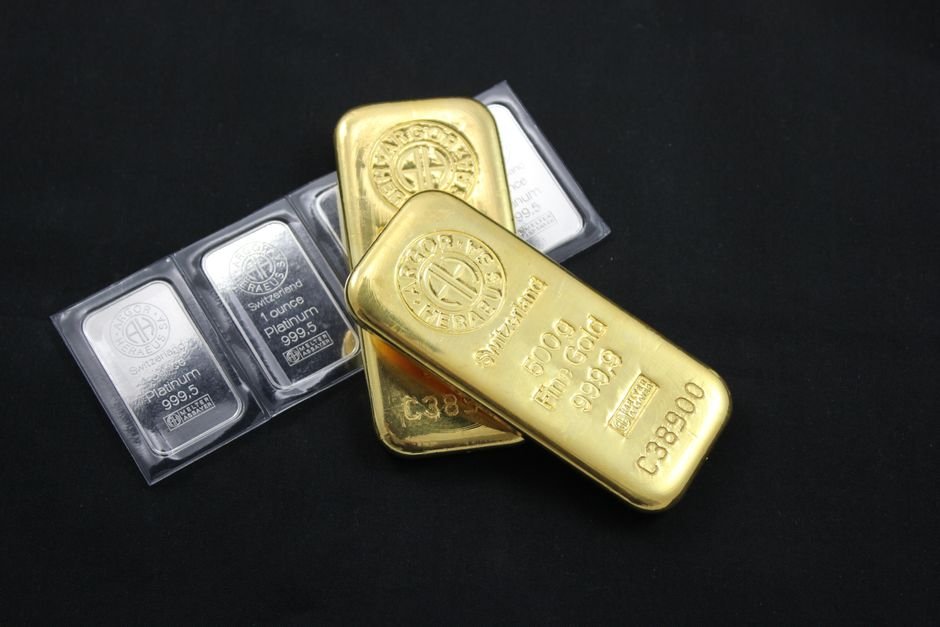
This is also why private investors — not just central banks — have turned to physical gold during periods of political uncertainty. Owning physical gold coins or bars gives individuals a tangible, portable store of value that doesn’t depend on the health of any institution or the decisions of any government.
How to Start Building a Gold Position
Understanding gold’s safe haven properties is one thing. Actually adding it to your financial strategy requires a few practical steps. Here’s where to begin:
- Decide on physical vs. paper gold. Physical gold — coins and bars — gives you direct ownership. Exchange-traded funds (ETFs) offer exposure without physical possession, but come with counterparty risks and fees.
- Choose well-recognized products. American Gold Eagles, Canadian Gold Maple Leafs, and gold bars from accredited refiners are widely accepted, easy to sell, and simple to verify.
- Buy at fair, transparent prices. Check the current spot price and compare dealer premiums carefully before purchasing.
- Think long term. Gold works best as a long-term wealth preservation tool, not a short-term trading vehicle.
- Store it securely. Use a home safe, bank safe deposit box, or professional vault storage depending on the size of your holdings.
At Absolute Bullion, you’ll find a straightforward selection of gold coins and bars priced at current spot price, with transparent premiums and no surprises at checkout.
Gold has earned its safe haven reputation through thousands of years of real-world performance — not marketing. It preserves purchasing power, protects against inflation, and holds its ground when markets panic. Whether you’re building your first position or adding to an existing one, understanding why gold behaves the way it does is the foundation of using it wisely. Visit absolutebullion.com today to explore current offerings and take your first step toward owning one of the world’s most trusted stores of value.
