
Market Insights
How Much Gold Does the US Government Hold in Fort Knox?
Aug
Fort Knox is one of the most famous — and most secretive — locations in the United States. Officially known as the United States Bullion Depository, it sits on the grounds of Fort Knox Army Post in Kentucky and has held a massive portion of America’s gold reserves for decades. For anyone curious about gold as a store of value, understanding what the government keeps locked away there — and why — gives important context for the broader precious metals market.
What Is Fort Knox and What Does It Store?
The United States Bullion Depository at Fort Knox was built in 1936 and opened in 1937. The Treasury Department constructed it specifically to house the nation’s gold reserves after the rapid expansion of federal gold holdings during the New Deal era. The building itself is a hardened structure with reinforced concrete walls, a blast-proof door, and multiple layers of physical security. It is not open to the public, and access is extremely restricted even for government officials.
Fort Knox stores gold in the form of standard mint bars, which are the familiar gold bar shape most people picture. These are not the refined, highly pure bars sold on the retail market — they are older bars cast to a slightly different specification. The facility also houses other important national documents and valuables from time to time, though gold is its primary purpose.
Fort Knox is not the only place the US government stores its gold. The Federal Reserve Bank of New York, the Philadelphia Mint, the Denver Mint, and West Point Bullion Depository in New York all hold portions of the national gold reserve as well. West Point actually holds a substantial share of the total reserve.
How Much Gold Is Actually There?
According to the US Treasury and the US Mint, the United States holds approximately 261 million troy ounces of gold in its official reserves, making it the largest national gold reserve in the world by a significant margin. Fort Knox specifically is reported to hold roughly 147 million troy ounces of that total, which represents a little more than half of all US government gold.
At current spot price, the value of just the Fort Knox holdings alone runs into the hundreds of billions of dollars — an enormous figure that underscores why gold continues to matter at the highest levels of national finance. The total US reserve is worth even more when you include the gold stored at West Point, the New York Fed, and other locations.
It is worth noting that the US government’s reported gold holdings have remained relatively stable for decades. The United States has not significantly added to or drawn down its official gold reserves in a long time, which reflects the ongoing policy decision to hold gold as a foundational reserve asset rather than actively trading it.
Has Anyone Actually Verified the Gold Is There?
This is one of the most persistent questions surrounding Fort Knox, and it has fueled decades of speculation and conspiracy theories. The last comprehensive, independent audit of Fort Knox gold is a subject of ongoing debate. The US government has conducted internal audits and verifications over the years, and officials from the Treasury, the Inspector General’s office, and Congress have visited the facility. However, a full independent audit by a third-party organization has never been publicly completed in the modern era.
In 1974, a congressional delegation and a small number of journalists were allowed inside the vault for a brief visit — one of the very rare public access events in the depository’s history. They confirmed gold was present, though that visit was not a formal audit. Calls for a more thorough and transparent audit of all US gold holdings have come from lawmakers and precious metals advocates over the years, but as of now no such audit has been conducted or publicly released.
The lack of full transparency does not necessarily mean anything improper has happened. Government institutions tend toward secrecy on matters of national security. Still, it is a legitimate reason why some investors prefer to own physical gold personally rather than relying solely on government-held reserves as a measure of gold’s integrity as an asset.
Why Does the Government Hold So Much Gold?
The United States built up its gold reserves largely during the twentieth century, particularly during the 1930s when President Roosevelt required Americans to turn in gold coins and bullion in exchange for paper currency. This dramatically increased federal gold holdings. Those reserves grew further during and after World War II as foreign governments and allies settled wartime debts in gold.
Even after President Nixon ended the convertibility of the US dollar to gold in 1971 — effectively ending the Bretton Woods system — the United States kept its gold. Most economists and policymakers view gold reserves as a confidence anchor for the currency system and a store of value that can be used in extreme financial circumstances. Central banks around the world hold gold for similar reasons.
Today, the United States holds more gold than any other country, followed by Germany, Italy, and France. The International Monetary Fund also holds a substantial reserve. Collectively, central banks and governments hold thousands of tonnes of gold, which gives the metal a foundational role in global finance that goes well beyond jewelry and private investment.
What This Means for Individual Gold Investors
Understanding how much gold governments hold puts private ownership in perspective. Central banks accumulate and hold gold precisely because it is a proven store of value over the long term. Individual investors can apply the same logic on a personal scale — holding physical gold as a way to preserve purchasing power, diversify a portfolio, and maintain wealth that is not dependent on any single currency or financial institution.
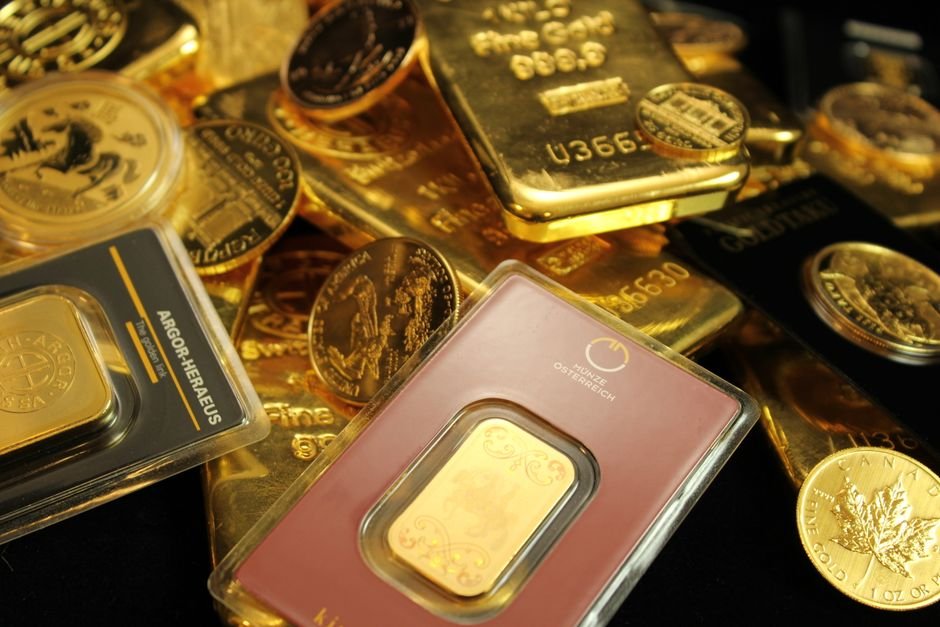
Unlike government gold locked in Fort Knox, gold you own personally is immediately accessible, verifiable, and fully under your control. Whether you choose gold coins like American Eagles or Gold Buffalo coins, or gold bars in various weights, owning physical gold puts you in the same company as the world’s largest and most sophisticated financial institutions.
If you are ready to start building your own gold reserve, Absolute Bullion offers a wide selection of gold coins and bars at competitive prices based on the current spot price. Visit absolutebullion.com today to explore available products and take a practical first step toward owning the same kind of asset that governments around the world have trusted for generations.
