
Market Insights
Gold vs Inflation: How Precious Metals Protect Your Wealth
May
Inflation quietly erodes the value of paper money over time. A dollar today buys less than it did ten years ago, and that gap tends to widen during periods of economic uncertainty. For centuries, gold and other precious metals have served as a reliable store of value — a way for ordinary people to hold onto their purchasing power even when currencies weaken. Understanding why this relationship exists can help you make smarter decisions about protecting what you’ve worked hard to earn.
What Inflation Actually Does to Your Money
Inflation is the gradual rise in the price of goods and services over time. When inflation rises, each unit of currency in your wallet or savings account buys a smaller share of real goods. Central banks can increase the money supply to stimulate economic activity, but when more dollars chase the same number of goods, prices climb. This is the basic mechanism that chips away at the real value of cash savings.
The danger is that inflation often moves slowly enough that people don’t notice it until significant damage has already been done. A savings account earning minimal interest while inflation runs higher means you are effectively losing purchasing power every single year. Certificates of deposit and traditional bonds may partially offset inflation in calm environments, but during high-inflation periods they frequently fall short.
The real cost of holding cash becomes most obvious during inflationary spikes. History has shown that periods of sharp inflation can wipe out the real value of savings surprisingly fast, which is precisely why many investors turn to tangible assets as a hedge.
Why Gold Has Endured as a Store of Value
Gold has been used as money and as a store of value across thousands of years and dozens of civilizations. Unlike paper currency, gold cannot be printed, diluted, or created by a government decree. Its total supply grows only slowly through mining, which means no single authority can suddenly flood the market with new gold the way central banks can expand the money supply.
This scarcity is the foundation of gold’s inflation-hedging reputation. When confidence in paper currency falls, demand for gold tends to rise. Investors, central banks, and ordinary savers around the world have historically moved wealth into gold during times of monetary stress, and that collective behavior reinforces gold’s role as a financial anchor.
It is also worth noting that gold is universally recognized. A gold coin or bar holds value whether you are in California, Europe, or Asia. That global recognition provides a level of liquidity and credibility that few other assets can match.
Silver, Platinum, and Other Metals in the Picture
Gold tends to get most of the attention, but silver, platinum, and palladium also carry inflation-hedging properties worth understanding. Silver in particular has a long monetary history and is often called “the poor man’s gold” because its lower price per ounce makes it more accessible for buyers who want to start small.
Silver also has significant industrial demand — it is used in electronics, solar panels, and medical applications — which means its price is influenced by both monetary factors and industrial cycles. This dual demand can make silver behave differently from gold during various economic conditions, sometimes offering additional upside during industrial booms.
Platinum and palladium are rarer than gold and have strong industrial uses, particularly in automotive catalytic converters. These metals can also serve as a store of value, though their price behavior is more closely tied to industrial supply and demand than to monetary policy alone. For most new precious metals buyers, starting with gold and silver makes the most practical sense before exploring platinum-group metals.
How to Actually Buy Precious Metals
Understanding the theory is useful, but knowing how to act on it is what matters. Physical precious metals come in several forms, each with its own tradeoffs:
- Bullion coins: Government-minted coins like the American Gold Eagle or American Silver Eagle are highly recognizable, easy to buy and sell, and carry a guaranteed purity and weight. They are an excellent starting point for new buyers.
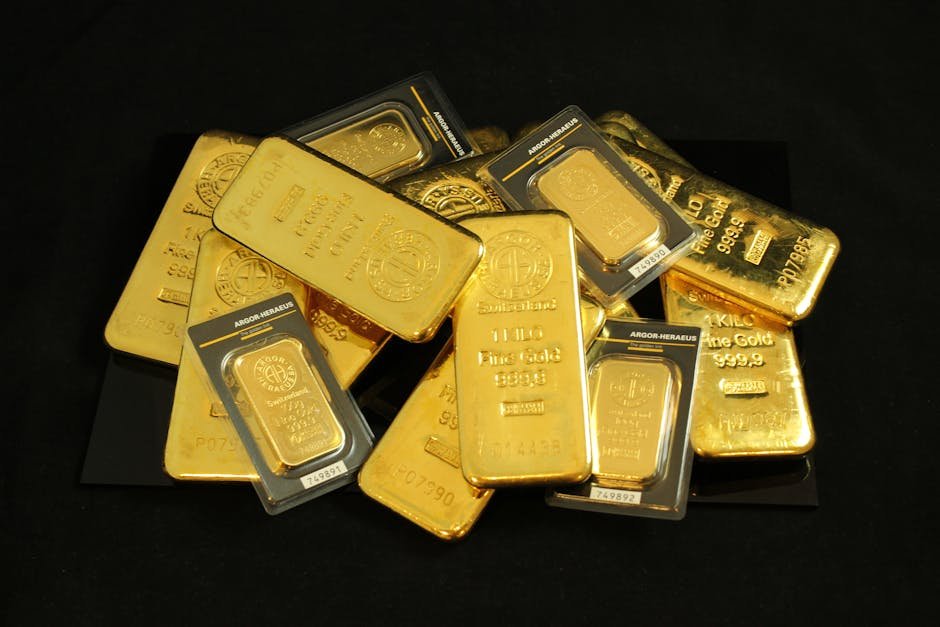
- Bullion bars: Bars typically carry lower premiums over the spot price compared to coins, making them efficient for larger purchases. They are available in a wide range of sizes.
- Rounds: Privately minted rounds are similar to coins in shape but are not legal tender. They often carry lower premiums and are a cost-effective way to accumulate silver.
When buying physical metals, pay attention to the premium — the amount above the spot price that a dealer charges. Premiums cover minting, distribution, and dealer costs. Comparing premiums across reputable dealers is just as important as watching the spot price itself. You can browse current inventory and pricing at absolutebullion.com to get a clear sense of what competitive premiums look like.
Storing and Securing Your Precious Metals
Once you own physical gold or silver, safe storage becomes a real responsibility. Common options include a quality home safe, a bank safe-deposit box, or a third-party secure vault storage service. Each approach has tradeoffs in terms of accessibility, cost, and security. A home safe gives you immediate access but requires a reliable, well-anchored safe. A bank safe-deposit box keeps metals off-site but may not be accessible outside banking hours.
Whatever storage method you choose, keep an organized record of what you own — including photographs, weights, and any serial numbers on bars. This documentation is valuable for insurance purposes and simplifies the process if you ever decide to sell.
Insurance is worth considering as well. Standard homeowner’s policies often have limited coverage for precious metals, so a separate rider or a specialized policy may be appropriate depending on the value of your holdings.
Building a Balanced Approach
Precious metals are best understood as a long-term store of value and a hedge rather than a short-term trading vehicle. Most financial planners who incorporate metals into a broader strategy treat them as one component of a diversified portfolio — not the entire portfolio. The goal is stability and purchasing power preservation, not speculation.
Starting small is perfectly reasonable. Even a modest allocation to physical gold or silver provides meaningful diversification from paper assets. As you become more comfortable with how the market works and how metals behave in different economic environments, you can gradually build your position in a way that aligns with your overall financial goals.
Inflation is not going away, and protecting your purchasing power requires deliberate action. Physical precious metals offer a time-tested way to do exactly that. If you are ready to take the next step, the team at Absolute Bullion can help you find the right products at current spot price, with transparent pricing and a straightforward buying process. Visit absolutebullion.com today to explore your options.
