


Gold has fascinated human beings for as long as recorded history allows us to see. From the burial chambers of ancient Egyptian pharaohs to the vaults of modern central banks, this soft yellow metal has maintained a grip on human imagination and economic life that no other commodity can match. But why? What is it about gold that makes it so persistently, stubbornly valuable across every civilization, every economic system, and every era of human history? The answer turns out to be a combination of physical properties, psychological pull, and hard-earned financial logic — and understanding it can help any thoughtful investor make smarter decisions today.
Gold’s Unique Physical Properties Set It Apart
Before gold became money, it became desirable. The reason is simple: gold does things other metals cannot. It does not rust, corrode, or tarnish. You can bury a gold coin for two thousand years, dig it up, and it will still shine. That kind of permanence was almost supernatural to ancient peoples, and it remains practically useful today. Gold’s resistance to chemical reaction makes it uniquely trustworthy as a store of material value.
Gold is also extraordinarily malleable. A single ounce can be hammered into a sheet large enough to cover roughly one hundred square feet, or drawn into a wire nearly fifty miles long. This made it easy for ancient craftsmen to work with, and it makes gold useful in modern electronics, aerospace components, and medical devices. Its beauty and workability made it the natural choice for jewelry and ornamentation long before anyone thought of it as currency.
Finally, gold is genuinely rare. It is not the rarest element on Earth, but it exists in quantities scarce enough to be precious yet plentiful enough to be useful. All the gold ever mined in human history would fit into a cube measuring roughly sixty-seven feet on each side. That scarcity is not a myth or a marketing story — it is a geological fact that has constrained the supply of gold for thousands of years and continues to do so today.
How Gold Became Money Across Cultures
Independently of each other, ancient civilizations across Egypt, Mesopotamia, China, India, and the Americas all arrived at gold as a preferred medium of exchange and store of wealth. That is not a coincidence. Gold passed every practical test that early societies needed from money: it was durable, divisible, portable, uniform, and limited in supply. No other naturally occurring material checked every one of those boxes the way gold did.
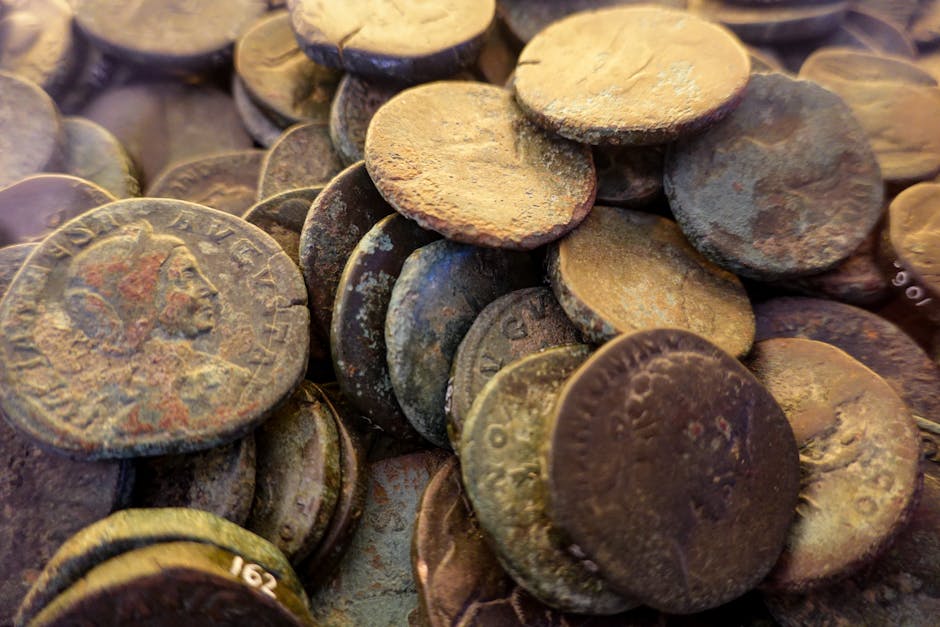
Formal gold coinage appeared in the ancient kingdom of Lydia, in what is now western Turkey, around 600 BCE. From there the idea spread rapidly through the Greek world, the Roman Empire, and beyond. For centuries, gold coins were the backbone of long-distance trade because merchants in different countries could agree on the metal’s value even when they shared no language, culture, or political system. Gold was a universal language before universal languages existed.
Even as paper currencies emerged, most of the world’s major economies tied their money to gold for centuries. The gold standard — the practice of backing paper currency with a fixed amount of gold — gave governments discipline and gave citizens confidence. Although most countries abandoned formal gold standards during the twentieth century, the metal’s role as a foundational reference for value never truly disappeared from the global financial system.
Gold as a Hedge Against Uncertainty
One of the most consistent patterns in financial history is that gold tends to attract attention when confidence in other assets weakens. During periods of war, political instability, currency crises, or high inflation, investors and ordinary people alike have historically turned to gold as a store of value that governments cannot print, dilute, or confiscate by decree. That reputation has been earned, not invented.
Paper currencies, by contrast, carry the risk of inflation — the gradual erosion of purchasing power that happens when more money is created than the economy can absorb. Gold’s supply grows only as fast as miners can pull it from the ground, which historically has been quite slowly. That natural limit on supply is a structural protection against the kind of debasement that has destroyed the purchasing power of dozens of currencies throughout history.
This is why central banks around the world continue to hold gold in their reserves today. When institutions that manage entire national economies decide to keep a portion of their assets in a physical metal rather than in financial instruments, it says something meaningful about gold’s enduring role as a foundation of financial confidence. It is not nostalgia — it is strategy.
The Psychological and Cultural Dimensions of Gold’s Value
Value is partly objective and partly social. Gold benefits from both. Across virtually every human culture that has ever existed, gold has carried symbolic weight as a representation of power, divinity, achievement, and permanence. Wedding rings, Olympic medals, and religious iconography all reach for gold when they want to signal something that matters deeply. That shared cultural meaning reinforces gold’s economic value in ways that are difficult to quantify but impossible to ignore.
There is also what economists sometimes call the network effect of value. Because everyone knows that gold is valuable, everyone is willing to accept it — which makes it valuable. This self-reinforcing logic has kept gold at the center of human commerce and culture for millennia. Unlike a stock or a bond, gold’s value does not depend on the performance of a company or the creditworthiness of a government. It depends on something deeper and more durable: a near-universal human agreement that has been continuously renewed for five thousand years.
What Gold’s History Means for Investors Today
Understanding why gold has been valuable for so long is not just an intellectual exercise — it has real implications for how you think about building and protecting wealth. Gold has historically served as a portfolio diversifier, a hedge against currency risk, and a long-term store of purchasing power. None of that constitutes a promise of future returns, but it does represent a meaningful track record worth taking seriously.
For individuals looking to own physical gold — coins, bars, or bullion — the key is to work with a reputable dealer who offers transparent, competitive pricing and a clear product selection. Absolute Bullion, based in California, offers a straightforward way to purchase physical gold at current spot price with the kind of clarity and professionalism that first-time buyers and experienced collectors both appreciate.
Conclusion: A Metal That Has Earned Its Reputation
Gold’s five-thousand-year track record is not a matter of sentiment or superstition. It is the accumulated result of real physical properties, historical utility, cultural consensus, and financial logic working together across centuries and civilizations. No other asset class can point to a history that long or that consistent. Whether you are drawn to gold as a financial hedge, a tangible asset, or simply a piece of history you can hold in your hand, the metal’s story is worth understanding deeply.
If you are ready to take the next step and explore adding physical gold to your portfolio, visit absolutebullion.com for live pricing, product options, and the guidance you need to make a confident, informed purchase. The oldest store of value in human history is still available — and still worth your attention.