


Few places in America carry as much mystique as Fort Knox, Kentucky. Officially known as the United States Bullion Depository, this fortified vault has captured the public imagination for decades. It sits on the edge of a military base, protected by armed guards, surveillance systems, and walls of granite and steel. But beyond the legends and Hollywood movies, a very real question lingers: how much gold does the US government actually hold inside Fort Knox? The answer is more complicated — and more fascinating — than most people expect.
What Is Fort Knox and Who Owns the Gold?
Fort Knox is a Treasury Department facility, not a Federal Reserve or military asset. It was built in the 1930s during the Great Depression, after President Franklin D. Roosevelt signed Executive Order 6102 in 1933, which required American citizens and businesses to turn in most of their gold coins and bullion to the federal government. That sweeping policy created an enormous stockpile of gold that needed a secure, permanent home. Construction of the Bullion Depository was completed in 1936, and gold deliveries began almost immediately.
The gold stored at Fort Knox belongs to the United States Treasury. It is part of the nation’s official gold reserve — a strategic asset held on behalf of the American people. The facility is operated by the US Mint, which falls under Treasury oversight. While the Federal Reserve holds gold certificates representing a portion of the reserve, the physical metal itself is a Treasury asset.
How Much Gold Is Actually Stored There?
According to the US Treasury’s own published reports, Fort Knox holds approximately 147.3 million troy ounces of gold. To put that in perspective, a troy ounce is slightly heavier than a standard ounce, and 147 million of them represents an enormous physical mass — roughly 4,580 metric tons of gold. At current spot price, this stockpile represents hundreds of billions of dollars in value, though that figure changes with the market every trading day.
It is worth noting that Fort Knox does not hold all of the United States’ gold reserves. The government stores gold at several other locations, including the Federal Reserve Bank of New York in Manhattan and the Philadelphia and Denver Mints. The total US gold reserve across all locations is approximately 261 million troy ounces, making the United States the largest single holder of gold in the world by a significant margin. Fort Knox holds just over half of that total.
Has Anyone Actually Verified the Gold Is There?
This is where things get interesting. Fort Knox has not undergone a full, independent audit in decades. The last comprehensive audit of the gold at Fort Knox was conducted in the 1950s, during the Eisenhower administration. Since then, the US Mint has conducted partial audits of specific compartments over the years, and the Government Accountability Office has reviewed procedures, but a complete, third-party, bar-by-bar audit has never been publicly completed in the modern era.
This lack of full transparency has fueled conspiracy theories for generations. Some skeptics claim the vault is empty or that the gold has been secretly leased or sold off. The Treasury and US Mint have consistently maintained that the gold is intact and accounted for, pointing to their internal audit processes. In 1974, a congressional delegation and members of the press were allowed a rare visit to Fort Knox to view the gold firsthand — a tour designed to quiet public doubt. Nonetheless, calls for a comprehensive public audit continue to surface in political circles from time to time.
What Does the Gold Actually Look Like Inside?
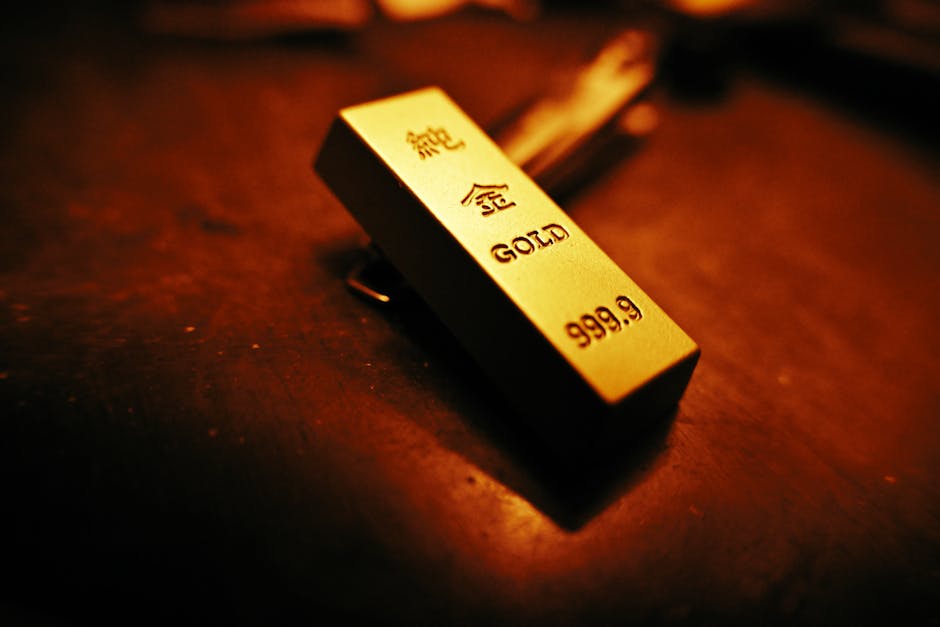
The gold at Fort Knox is stored as standard gold bars, not coins or ornate pieces. These are known as melted bars, and many of them are not the uniform, shiny bricks you see in movies. Because gold was collected from many different sources during the 1930s confiscation period, the bars vary in purity and were melted down from coins, jewelry, and other forms of gold. Some bars have a purity below the standard .9999 fine gold that modern investors and dealers work with.
The vault itself is divided into multiple compartments, each sealed individually. The building is constructed of granite, steel, and concrete, with a blast-proof door weighing more than 20 tons. No single person knows the entire combination to the vault — different members of the Mint staff hold different parts of it. The facility is surrounded by fences, cameras, and armed guards from the United States Army, which maintains Fort Knox as an active military installation.
Why Does Government Gold Matter to Private Investors?
Understanding the scale of government gold reserves helps individual investors put their own holdings in context. Governments and central banks around the world hold gold as a reserve asset precisely because gold has maintained its role as a store of value across centuries and economic cycles. When central banks increase their gold purchases — as many have done in recent years — it signals institutional confidence in the metal as a long-term financial anchor.
For private citizens, owning physical gold is one way to hold a tangible asset outside the banking system, much like governments do at a larger scale. Whether you are buying a single one-ounce American Gold Eagle coin or building a larger portfolio of gold bars, you are participating in the same fundamental principle that motivates governments to stockpile the metal: wealth preservation. If you are curious about getting started, Absolute Bullion offers a straightforward way to buy physical gold and silver with transparent pricing.
Common Myths About Fort Knox Worth Debunking
- Myth: Fort Knox is empty. The Treasury’s published figures, partial audits, and the 1974 congressional visit all support that gold remains in the vault.
- Myth: The gold backs US currency. The United States left the gold standard in 1971. Today’s dollar is a fiat currency and is not redeemable for gold.
- Myth: Fort Knox only holds gold. Historically, the facility has stored other valuables, including documents of national importance during World War II.
- Myth: The US could easily sell its gold to pay off debt. Even at current spot price, the entire US gold reserve would cover only a small fraction of the national debt.
Final Thoughts
Fort Knox represents something larger than a vault full of metal. It is a symbol of America’s long and complicated relationship with gold — from mandatory confiscation during the Depression to its role as a strategic reserve in the modern era. The approximately 147 million troy ounces held there remain one of the most significant concentrations of physical gold anywhere on the planet, and the questions surrounding its full accounting keep it relevant to financial conversations today.
For everyday investors, the lesson is clear: gold has always mattered, to individuals and governments alike. If you are ready to explore owning physical gold or silver for yourself, visit absolutebullion.com to check live pricing and browse available products from a trusted California-based precious metals dealer.