
Market Insights
What Gold Qualifies for an IRA: IRS-Approved Coins and Bars Guide
Oct
Adding physical gold to a retirement account sounds appealing, but the IRS does not allow just any gold to enter an Individual Retirement Account. There are strict purity standards, approved product lists, and storage rules that every investor needs to understand before making a move. If you buy the wrong product or store it the wrong way, you could face taxes and penalties that wipe out any benefit the gold was supposed to provide. This guide walks you through exactly what qualifies, what does not, and how to set yourself up correctly from the start.
Why the IRS Sets Rules for Gold IRAs
A Gold IRA is technically a self-directed IRA. The IRS permits these accounts to hold certain alternative assets, including physical precious metals, but it draws a firm line around which metals qualify. The rules exist to prevent investors from using tax-advantaged retirement accounts to hold collectibles, which Congress has treated differently from investment-grade assets for decades.
Under IRS code, gold held inside an IRA must meet minimum fineness requirements. This means the metal must be a recognized investment-grade product, not a rare coin valued for its scarcity or a novelty item valued for its design. Understanding this distinction is the first step to building a compliant precious metals retirement portfolio.
The IRS Purity Standard for Gold
The IRS requires that gold held in an IRA meet a minimum fineness of .995, which means the metal must be at least 99.5% pure gold. This standard applies to gold bars and rounds. It is a straightforward benchmark, but it does exclude a number of popular gold coins that fall just below that threshold.
There is one important and well-known exception. The American Gold Eagle coin is only .9167 fine, meaning it is 91.67% gold. Congress specifically carved out an exemption for American Gold Eagles, so they are fully eligible for IRA inclusion despite falling below the general purity rule. No other coin below .995 fineness receives this treatment, so do not assume that popularity or government mintage alone makes a coin eligible.
IRS-Approved Gold Coins
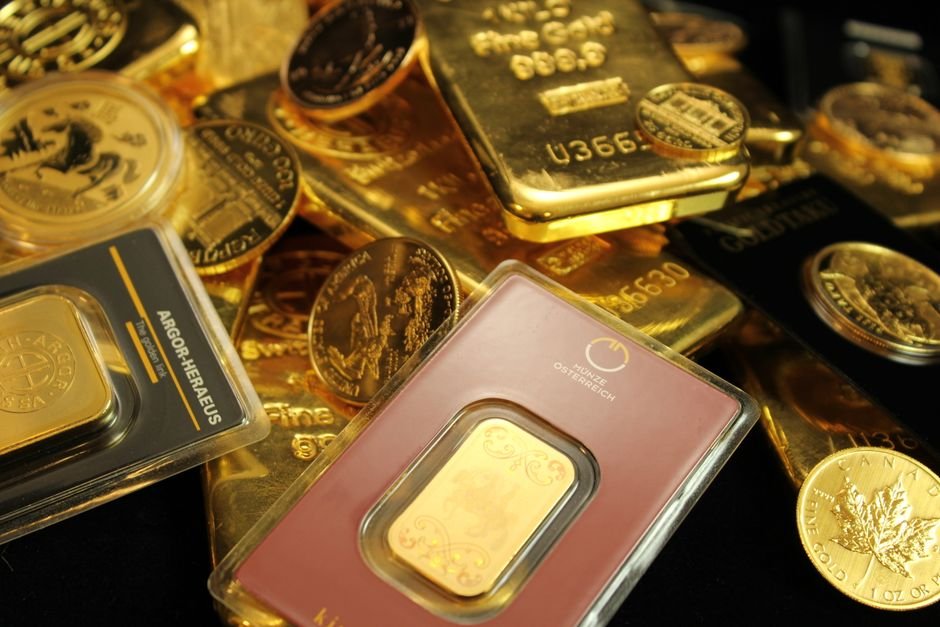
Several government-minted gold coins meet IRS requirements for IRA inclusion. Knowing this list in advance prevents costly mistakes at the point of purchase. The most widely held IRA-eligible gold coins include:
- American Gold Eagle — Available in 1 oz, 1/2 oz, 1/4 oz, and 1/10 oz denominations. The only sub-.995 coin with a congressional exemption.
- American Gold Buffalo — Struck at .9999 fineness, this is the first 24-karat gold coin produced by the U.S. Mint and fully IRA-eligible.
- Canadian Gold Maple Leaf — Minted at .9999 fineness by the Royal Canadian Mint, widely recognized and IRA-approved.
- Austrian Gold Philharmonic — Minted at .9999 fineness and produced by the Austrian Mint, this coin is legal tender in the European Union and fully eligible.
- Australian Gold Kangaroo — Produced by the Perth Mint at .9999 fineness and accepted for IRA purposes.
Coins that do not qualify include pre-1933 U.S. gold coins, South African Krugerrands (which are .9167 fine and lack the Eagle’s special exemption), and any coin considered a collectible. When in doubt, verify IRA eligibility before you buy rather than after.
IRS-Approved Gold Bars and Rounds
Gold bars and rounds are eligible for IRAs as long as they meet the .995 minimum fineness standard and are produced by a manufacturer accredited by a recognized authority. The IRS accepts bars and rounds from refiners and assayers that are approved by the New York Mercantile Exchange (NYMEX), the Chicago Mercantile Exchange (CME), or that are listed by the London Bullion Market Association (LBMA).
Common IRA-eligible bar sizes include 1 gram, 5 gram, 10 gram, 1 oz, 10 oz, and 1 kilogram bars from producers such as PAMP Suisse, Valcambi, and the Perth Mint, among others. Each bar should come with an assay certificate confirming its weight and purity. That documentation protects you and satisfies custodian requirements when the metal is deposited into your account.
Private mint rounds can also qualify if they meet the fineness requirement and come from an approved refiner, but they are less commonly accepted than bars from major recognized producers. Always confirm eligibility with your IRA custodian before purchase.
Storage Rules You Cannot Ignore
Even if you buy perfectly qualified gold, storing it incorrectly disqualifies your IRA. The IRS prohibits home storage of IRA-held precious metals. Gold inside a self-directed IRA must be held by an approved, independent custodian and stored in an IRS-compliant depository. Keeping the metal in a home safe, a personal safe deposit box, or anywhere under your own control is treated as a distribution, which triggers income taxes and potentially a 10% early withdrawal penalty if you are under age 59½.
Approved depositories are professional vault facilities that provide segregated or commingled storage options, insurance, and reporting. Your IRA custodian typically has relationships with one or more approved depositories and handles the logistics of transferring metal on your behalf. Storage fees are an ongoing cost to factor into your planning.
How to Open a Gold IRA and Buy Eligible Metal
The process is straightforward once you know the rules. Here is a basic roadmap:
- Choose a self-directed IRA custodian that specifically supports precious metals accounts. Not all custodians allow alternative assets.
- Fund the account through a rollover from an existing IRA or 401(k), or through a direct contribution if you are within annual IRS limits.
- Select eligible products from a reputable dealer. At Absolute Bullion, you can view IRA-eligible gold coins and bars at current spot price and work through the purchasing process with confidence.
- Direct the metal to the depository. Your custodian coordinates delivery so the gold goes directly to the approved storage facility, never to your home address.
Keep records of every transaction, including purchase receipts and assay certificates. Good documentation simplifies annual IRA reporting and protects you if questions arise later.
Common Mistakes to Avoid
New investors frequently make a few avoidable errors. Buying numismatic or collector coins thinking they qualify is one of the most common. Collector value and IRA eligibility are entirely separate things. Another mistake is purchasing IRA-eligible gold and then taking physical possession of it, which immediately creates a taxable event. Finally, some investors overlook custodian and storage fees, which can meaningfully affect the overall cost of holding gold in a retirement account over time.
Working with knowledgeable partners from the start reduces these risks significantly. Review IRS Publication 590-A and 590-B for the official rules, consult a tax advisor familiar with self-directed IRAs, and source your metal from a dealer who understands the requirements.
Building a Gold IRA the right way starts with the right products and the right process. Visit absolutebullion.com to browse IRS-eligible gold coins and bars at current spot price, and take a confident first step toward adding physical gold to your retirement strategy.
